Not to be weird, but it’s been a while. How are you? Still eating food? Great, I think we can pick up pretty much where we left off.
I’ve now lived in the US for about 15 years, and so have become very accustomed and comfortable with the local cuisine, especially around this time of year for the traditional over-indulgence that is Thanksgiving.
In years past, my speciality has been to hide large quantities of cheese inside mashed potato, but this year my partner’s brother claimed the mash, so I had to learn to make something else.
Putting aside the misnomer of “stuffing” when it’s not stuffed inside the bird you’re eating (mostly because doing so ruins the cooking of said bird so I’m entirely fine with not doing it “properly”), stuffing done right is basically a savoury bread putting with a good combination of soft bread and crispy edges from baking.
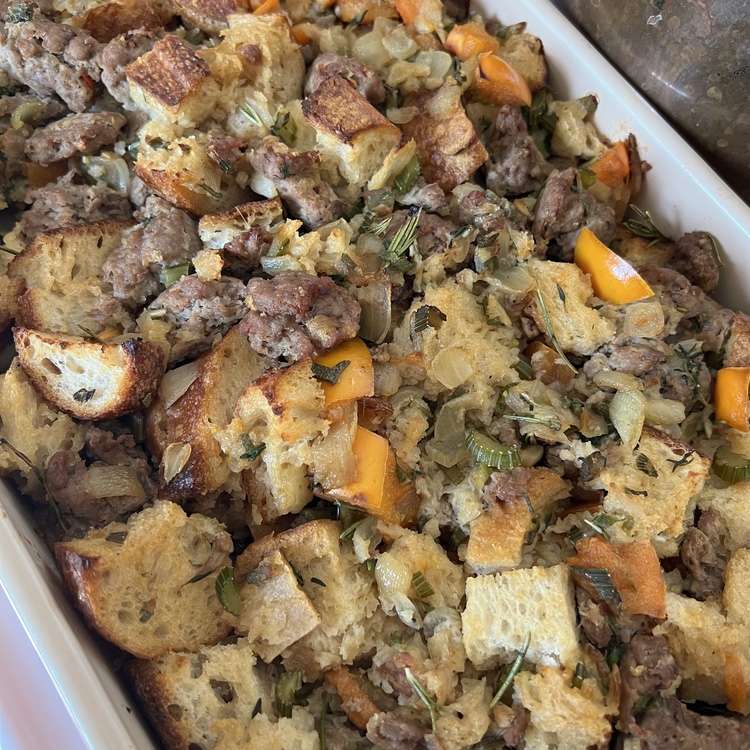
One fact about Thanksgiving food that I acknowledge while not-entirely-respecting, is the love of sweet: There are some truly indulgent sweet dishes in a Thanksgiving buffet: There’s sugar everywhere, and sweet yams topped with marshmallows are infamous. I have no strong desire to eat that (again), but this week my farm box stocked me with a load of persimmons, so I’ve integrated them into this bread and sausage stuffing to provide a little sweet kick, and it’s great.
Recipe
Make the night before and let sit overnight to develop flavour, and then bake to serve.
For the Sausage
- 450g Ground Lamb
- 450g Ground Pork
- 20g Salt
- Paprika
- Fennel Seed
- Ground Coriander
- Ground Black Pepper
- 2x Thai Bird Chillis, deseeded and chopped fine.
There’re a lot of ways to approach the sausage; really any combination of meats that appeal to you will work, but I wanted to mix my bases and add a bit of complexity by using lamb with pork. The only downside here is that if you’re not grinding your own meat, you might find that your meat blend is a little leaner than you’d like for sausage. Good recipes will say to salt sausage at about 2% of the weight. Mix all that together until well distributed. Add the spices and chopped chilli and mix until even.
Take a tablespoon sized piece of your sausage meat and fry it, give it a taste and season further as needed before cooking the whole batch.
When I tasted this sausage sample I was a bit underwhelmed by the spicing, but also slightly concerned that 2 chillis had made it too hot. I wanted a little heat because I think it would play really nicely with the fruit. But also, this was for a family meal so I didn’t want anyone with a tender palette to be put off. What I will say is: After the overnight rest, it all mellowed out and if I did it again I might even add more chilli.
Tear the sausage into rough but even chunks and cook on medium-high heat. Don’t make them too small, else they’ll dry out — you can always break them apart further after they’re cooked. Also don’t crowd the pan, you want to develop some crust. Put aside in a bowl for later.
For the rest of the stuffing
- 1 Loaf Sourdough
- 1 large onion, 6 cloves of garlic, 3 sticks of celery
- Fresh Sage, Rosemary, Thyme
- 2 Cups Chicken Bone Broth
- 1 Egg
- 6 Persimmons (diced)
- Lemon Zest
- 2 tbsp butter for baking.
First, dry the bread. Chop and tear into 2-3cm cubes. Spread them, not too crowded, on baking sheets and give them 15 minutes in a 200º oven. Be careful not to toast it, though.
There’s a popular and reflexive theory that you should use stale bread for stuffing. This is suboptimal: You should use dry bread. The way that bread goes stale over days is different from if you dry fresh bread in the oven: Stale bread crystallises in a way that dried bread does not, which later affects how the bread absorbs the chicken stock, and properly dried bread will end up with a superior texture when it’s all done.
Once dried, Take a good size handful and keep aside. We’ll add it late in the process to have a mix of textures.
Fry the onion, garlic, and celery with olive oil over medium heat. Give it some salt and pepper. Turn down the heat a bit so that the onions can slowly caramelise a bit.
Separate all the herb leaves from their stems, give a bit of a rough chop, and add them to the frying onions. Let that simmer away for about 5 more minutes, then remove from the heat and let cool in a bowl.
Combine the sausage chunks and fried onion and herbs and mix. Add most of the bread and mix until even.
At this point, crack in the egg, and start adding the chicken broth: Do this increments of about a ladle at a time, so as not to water-log the bread, but for a good sized loaf you’ll find it’ll absorb about two cups. Turn the stuffing over with your hands to combine, which helps you keep an eye on how wet the bread is getting. If you think it’s going to get mushy, stop and keep a little broth aside for tomorrow.
Add the diced persimmons, and turn it all over to combine once more. We save these to the end because they’re going in raw and they can be a little soft and fragile so don’t want to cause them to get mushed. Now, put the entire mixture in the fridge to sit overnight.
In the morning, bring it out, add the bread that you held back, and add the remainder of the broth. Add the lemon zest, and mix it all around one last time. The idea here is that the bread you held back is going to be crispier than that which sat overnight. The overnight bread will be softer, but will have absorbed a glorious amount of broth and herb flavour.
Finally, rub butter all around your baking dish, then empty the mixture into it. Cover with foil.
Depending on your big meal logistics, you can now either bake it for about 30-minutes at 375ºf/190ºc, take it out and then give it a second bake uncovered just before you eat. Or, bake it for 25 minutes and then remove the foil and give it another 20 minutes to brown and crisp. The nature of thanksgiving catering is that this is never going go perfectly, but the stock and the overnight soak did a pretty good job and the stuffing still comes out nice and moist even if it sits in the oven a little long. This is also why it’s quite important not to overcook the sausage before.
The recipe was a success, and the persimmons were a really nice seasonal novelty as part of it. If I could change anything I’d try to improve the sausage to make it a little fattier and retain more juiciness; I might also let it sit overnight raw to develop flavour better (although it still did this well after cooking.)