Knockout Lemon Tart

Regular readers of this blog will realise that while I love cooking in general, creating puddings, sweets and bakes is what really gives me my culinary kicks. 

Almost a year since my first visit, I’ll soon be heading back to Leith’s School of Food and Wine.  This time it’s courtesy of my best friend (and devout worshipper of the sacred cinnamon swirl), Fiona.  She’s decided that the one thing I need to improve my life, and presumably hers, is the ability to construct a perfect Sicilian lemon meringue sundae.  As such, I am being sent on a ‘Retro puddings workshop’ and shall return laden with treats.

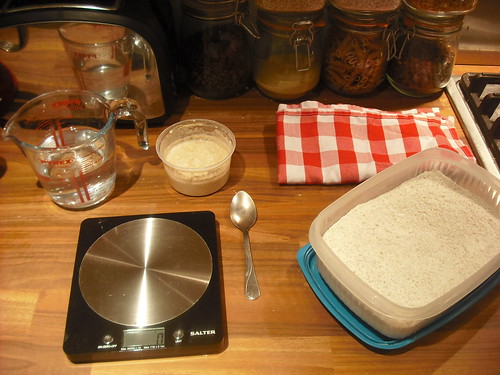
In the meantime, here is a recipe for you that I didn’t have to go to school to learn.  I often used to boldly state that “I don’t do pastry”.  That was until just over a month ago when I decided that, having been given the task of cooking dessert for ten on Christmas day, I should face my pastry demons.  As an alternative to the sticky, heavy, boozy Christmas pud produced by my mother I thought I’d try my hand at some zesty lemon tarts.  Lo and behold, they did not burn, they did not flop and they did not fall apart!  Such was my joy at this, I am sharing my recipe* so that you too might feel like the cook you’ve always wanted to be…TartPastry

Ingredients

  • 255g unsalted butter
  • 200g caster sugar
  • 1/4 tsp salt
  • 2 eggs
  • 500g plain flour

Instructions

  • In a large bowl combine the butter, sugar and salt by mixing until smooth (I use a hand-mixer)
  • Mix in one of the eggs until smooth and then do the same with the other
  • Add the flour all at once and then mix on a low speed until incorporated
  • Tip the mixture on to a lightly floured work surface and divide into four and shape into a disk about 2cm thick
  • Wrap the disks in clingfilm and chill for two hours
  • Roll out pastry (do this quickly and avoid touching the dough too much) to the thickness you want – but no more than 1/2cm – and cut to fit your tart tin (you’ll get about 12 individual tartlets from this recipe or 4 nine-inch tart shells)
  • Press pastry into the tin, trim with a sharp knife and pop into the fridge for a final ten minute chill
  • Cook for a maximum of 10 minutes in a 190 degree but keep an eye out and remove them when golden brown in colour
  • Cool them on a wire rack and get on with making the filling

Lemon cream filling

Ingredients

  • 155ml lemon juice
  • 3 eggs & 1 egg yolk
  • 170g caster sugar
  • A pinch of salt
  • 225g unsalted butter

Instructions

  • Set up a bain marie on the hob
  • Combine the lemon juice, whole eggs, egg yolk, sugar and salt in a bowl
  • Place the bowl over the boiling water a whisk the ingredients together immediately
  • Keep whisking for 10 minutes or so (sorry, this takes some elbow grease) until the mixture becomes very thick
  • Remove the mixture from the heat and leave to cool slightly (about 60 degrees – ie still hot-ish – should do it)
  • While the mixture is cooling cut the butter into one-inch cubes
  • Using an electric whisk, mix the each cube of butter fully in to the warm mixture and then add the next, once all the butter is gone give the mixture one last thirty second blast with the whisk and you should be left with a thick, pale and glossy cream

Pour the lemon filling into your tart base, smooth out and leave to set in a fridge for at least 15 minutes.  All that’s left to do now is try not to look too smug when everyone exclaims how amazing it tastes.

*based on a version that appears in this cookbook

Roast Potatoes and Red Wine Vinegar

This evening I continued a new trend for hosting a small number of my friends for a medium-sized dinner party. Is ‘twice’ a trend? Perhaps. Last week was curry (that is, Indian food via Britain) and this week was a roast chicken dinner. There’s quite a lot to write about both, and the absence of a write up of the former means I’m going to post a very short thing about the latter, with more pending.

The roast potatoes accompanying the meal were derived from this recipe by Gary at Roast Potato. Everything about that preparation worked pretty well for me (and I should emphasize his point about cooking the potatoes beyond parboiled so that they flake at the edges.) Particularly effective though was one final touch: Near the end of cooking, once potatoes have started to crisp, add a dash of red wine vinegar. Tasted brilliant.

Cooking with Reddit

Reddit’s 2010 comment of the year vote came around, and one popular thread was this: I have $13 until my next pay check. In response, user Electric Sandwich proceeds to stream a whole set of cheap, delicious sounding Puerto Rican recipes for rice, pork shoulder and twice-friend plaintains in inimitable style:

Buy yourself a nice meaty pork shoulder. 5 lbs should do nicely.
Bring that fucker home and get out a long, thin knife.
In a pilon (that’s a mortar and pestle gringo) smash up a few cloves of Garlic, some sazon, some, salt, some pepper, and some oil.
Grind it up GOOD. Now you have another ghetto sofrito.
Take your knife and stab some holes in the pig. Twist the knife around so the holes get nice and wide.
Now, take some of your sofrito and stuff it into the holes. Don’t be shy blanco, ram it in there. Use the remainder to roughly coat the outside of the pig. RUB IT. CARESS IT. This pig died so that you may eat. Salt that shit all over the outside and crack some fucking pepper on there.

Further down, user TVArmy has a recipe for pan-friend pizza:

Get out a cast iron or nonstick skillet. A conventional skillet will do in a pinch. Put down a film of olive oil (or veggie oil if you don’t have olive oil), and heat it up until it shimmers. Put the dough in, and cook it until it gets brown on the bottom. About 3 minutes, but lift up the corner to check earlier. Push down any big bubbles. Flip it, and wait about 3 minutes again.

Also in the thread are links to more recipes on The Awl, and Mojo de Ajo.

Ingredients

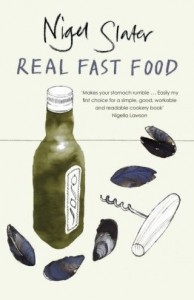
These days, I’m getting more and more adventurous with my cooking.  Not just with what I eat, but with what I buy and how I cook it.  This may well stem from recently receiving two cookbooks as presents that are poles apart when it comes to the ingredients required and the skills needed to create the dishes.  For the first time ever, leafing through the pages of Nigel Slater’s Real Fast Food, I had the glorious thought “My god, I’m just too good for this book”.  Conversely, when fellow munchmunch-er Ben produced a copy of Tartine’s patisserie volume, there was a good long pause as I considered the fact I may well need to invest in a confectionary thermometer.

Slater

Tartine

I think I’m moving away from my preferred method of ‘throwing everything into a dish and hoping for the best’ but no matter how many new recipes I try and meals I create, 9 times out of 10, you can be guaranteed that I’ll try and make use of my ‘safety ingredients’.

The French have their mirepoix, the Italians soffritto and the Chinese,  yuxiang.  I, however, have my safety net of garlic in savoury recipes and vanilla in sweet.

I put garlic in almost everything in varying amounts (from a delicate half-clove to teaspoon upon teaspoon of pungent purée). Even if it doesn’t really go, I don’t care.  Every dish has to start somewhere, so why not be with garlic? 

My passion for baking means that I have a similar affection for vanilla in all its forms: pods; seeds; extract; and powder. You name it and vanilla will have found its way into my cakes regardless of whether or not it’s strictly needed.

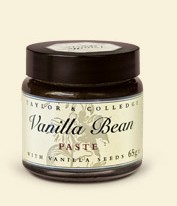
Which brings me to my favourite vanilla-y discovery and the entire purpose of this rambling post:  Taylor & Colledge’s vanilla bean paste.   Made using 100% natural vanilla beans,  I only discovered this pretty little jar of yumminess a few months ago and already it’s become key to my baking.  As well as being a super-quick alternative to scraping out vanilla pods, just opening up the pot releases what is – in my view – one of the most delightful smells in the world.

vanilla

So, these are my go-to ingredients and I absolutely couldn’t live without them. Everyone has an ingredient that they couldn’t live without.  So what’s your absolutely favourite ingredient that you must, must use?

H Forman & Son

I can say with confidence that we have dined at the most British of British restaurants. It’s in the capital overlooking the site of the 2012 Olympics, it dishes up salmon that’s been ‘London cured’ on the premises since 1905, it serves glorious syrup sponge puddings steaming in individual Tate & Lyle tins. Oh, and it’s got its own coat of arms!

FORMANS

H Forman & Son is just moments from the Counter and the Hackney Pearl so, in theory, you could have a rather lovely day-long food tour of this decrepit part of Hackney. Highlights of our evening meal included a miniature copper saucepan containing yellow, buttery, fluffy Jersey Royals that accompanied the smoky eel fillet starter (though the eel itself must be an acquired taste) and the sea bass which married very well with a sweet vanilla froth.

Mind you, the meal was not the only well conceived thing about Formans. You can wander round the Smokehouse art gallery on the second floor while you wait for your table. Although we dined late and missed opening hours, the friendly doorman assured us it is well worth a look. The wine menu was extensive – huge glass-fronted wine coolers registering a different temperature for each type of grape line the walls as you enter the restaurant, daring you to get sozzled in the shadow of the Olympic stadium. The pièce de résistance, however, was the walk to the loos. No joke. A darkened corridor with stainless steel portholes allows diners to peer down onto the smokehouse. Ghostly and clinical in the evening, the factory floor is home to a kiln-shaped smokery bigger than most East London flats. If there’s anything that adds to an already special meal out, it’s a little bit of adventure and a large helping of industrial cookware.

FORMANS2

Breakfast Tomato Sauce

Two Christmases ago, my second since moving from London to the US, David took me to The Counter in Hackney Wick, East London. Their specialty is a thick, sweet, tomato relish served on the side of a variety of delicious breakfasts. Ever since, I’ve always held a special affection for a well made tomato sauce and whilst making a breakfast spread this morning, tried to improvise my own. One thing that the America fried breakfast can lack is moisture, since they don’t do baked beans here. The tomato sauce works really well.

There are all kinds of potential that could be done here, but this first base version was delicious.

Ingredients

  • 1 can of roughly chopped tomatoes.
  • 1 leek, finely sliced.
  • 2 tablespoons brown sugar
  • A teaspoon of cider vinegar
  • Worcestershire sauce
  • A little salt, a generous amount of pepper
  • Olive oil

Heat a pan to medium heat, add a splash of olive oil (less than you’d usually use; just enough to coat the leek.) Add the leaks, immediately drop the heat a little, soften them and season with salt and pepper. As the oil is absorbed by the leeks, add the cider vinegar to prevent them drying out or burning. Pour over the entire can of chopped tomatoes, stir and heat to a simmer. Then add the sugar and stir in.

You’ll now need to let it simmer some more, so that it starts to reduce and thicken. In my case, I let it go for twenty minutes, then tasted it and added a generous amount of ground black pepper; about three teaspoons. A dash of worcester sauce to finish, the pan was left to simmer on a low heat for around another twenty minutes whilst the rest of the breakfast was prepared.

The result is a thick, chunky tomato sauce with spice and sweetness. It was brilliant.

You can likely accelerate the process by draining the canned tomatoes, working at a higher heat, or even adding corn flour, but as with the best ragus, the key to getting sweetness from the leeks (or onions, or shallots, or whatever you like) is to fry them as slowly as you can.

Sky garden spuds

Boil ‘em, mash ‘em, stick ‘em in a stew. Or, in our case, grow ‘em on a third floor balcony in Hackney and tuck into ‘em fresh out of the earth.

Potatoes

We’d been tending these glorious potatoes (Organic Orlas and Maris Peers) since early March and enjoyed a continuous harvest from mid June until the final batch was uprooted last week. There’s such pure joy in digging up the bounty, quickly boiling the little golden vegetables and devouring them coated in nothing but real butter and fresh mint.

It’s all about making the most of our limited space and the handy planter bags that we used to grow our spuds have immediately been refreshed and replanted with carrots for the autumn.   Have you tried creating an urban kitchen garden?  What would you recommend we grow now?

A Come Dine With Me special

On holiday in the south of France last week with four other foodie types and some clever bod had an idea: why not make use of the local produce and the villa’s fab kitchen in a Come-dine-with-me-style cook-off? The Channel 4 TV show is one of my guilty pleasures so I was pretty excited when our names went into an ashtray (no hat was available at the time) and we were each allocated a course to cook.

The menu on the night was as follows:

Canapés
Chilled cucumber and dill soup
Pea and parmesan arancini
Mini moules mariniere

Starter (by @simongoble)
Fresh vegetable risotto with gorgonzola

Fish Course (by @COOKBOOK_HQ)
Cod with a herb and multi-seed crust, roasted vine tomatoes

Main Course (by non-tweeter Aaron)
Spicy Tuscan bean stew with chorizo

Dessert (by @dsingleton)
Pear tarte tatin and homemade lavender ice cream

I don’t really do delicate food – as you can see from some of the big old cakes that feature on this blog – so was initially dismayed when I drew the amuse-bouche/canapé course. I tried my best to scale down dishes that I would normally serve in great big bowls and, surprisingly, it turned out fairly well. So well, in fact, I thought I’d you’d like the recipes to have a go yourself (they serve five).

Chilled cucumber and dill soup

Ingredients

  • 1 cucumber, peeled, seeded, coarsely chopped
  • 1 onion, coarsely chopped
  • 250ml vegetable stock
  • 1 teaspoon dried dill
  • 125ml double cream
  • Salt and pepper, to taste

Instructions

  • Place cucumber, onion and stock in a small saucepan, bring to a boil then reduce heat and simmer until soft
  • Using a blender puree with dill and cream until smooth
  • Add salt and pepper according to taste
  • Pour into a container with a pouring spout
  • Cover and refrigerate to chill until ready to serve (I served mine in some swish looking martini glasses)

Pea and parmesan arancini

Ingredients

  • Approx 200g risotto mix (see recipe in link below)
  • 50g peas
  • 2 eggs, beaten
  • 100g breadcrumbs
  • 600ml oil for frying
  • Rocket leaves to serve

Instructions

  • Make up a basic risotto recipe. I have my own depending on what’s in the cupboard but you can find a easy-to-follow one here
  • Add a large handful of fresh peas and an extra 100g of parmesan to the risotto mix near the very end of it’s cooking time
  • Roll the risotto into walnut-sized balls
  • Dip the balls in the beaten egg
  • Coat the balls in breadcrumbs
  • Deep-fry in the hot oil for 2-3 minutes until golden
  • Remove from the oil and place on a sheet of kitchen roll to absorb any excess oil
  • Serve on a bed of rocket

Mini moules mariniere

Ingredients

  • 1 onion
  • 1 clove garlic
  • 2 tablespoons of oil
  • 500g mussels, de-bearded and carefully scrubbed
  • 1 bunch of herbs de provence or similar bouquet garni
  • 150ml white wine
  • 200ml double cream
  • Crusty bread to serve

Instructions

  • Fry the onion and garlic in the oil with the herbs in a large, deep saucepan
  • Tip in the mussels
  • Pour in the wine and simmer for approximately four minutes with a lid on until the mussels are open and pink in colour (discard any that fail to open with the heat – they’ve probably been dead for yonks)
  • Remove the parcel of herbs
  • Stir in the cream and cook for one more minute
  • Serve steaming in little bowls with plenty of crusty bread to mop up the sauce

And here’s the end product, yum!

Amuse-bouche

I’m just glad I didn’t do pudding. After the four types of wine we served with dinner, I’m not sure I would have been able to locate a plate, let alone serve up anything appetising!  Indeed, the hangover might be one of the reasons we still haven’t decided who won the competition…

Smokey Dauphinoise

There comes a point in your life when you have to ask yourself this one, vital question: why am I reading the internet when I could be tucking into a lip-smacking bowl of smoked mackerel dauphinoise potatoes? I asked myself that very question when I came across this recipe on Domesticsluttery.com last week and immediately I found myself compelled to leave my computer, march to the supermarket and cook like my life depended on it. The result – after a quick switcheroo of the ingredients because I decided that using absolutely full-fat everything would result in a food coma from which I might never awake – is my smokey dauphinoise.

Dauphinoise

What goes in?

  • Three smoked mackerel fillets, flaked into pieces
  • Four large Maris Piper potatoes, thinly sliced
  • 200ml single cream
  • 200ml semi-skimmed milk
  • 1 tbsp whole grain mustard
  • 2 knobs of butter
  • 1 clove of garlic
  • Salt and pepper

What do I do?

  • Rub a small knob of butter around the sides and base of an ovenproof dish to coat it. Then halve a clove of garlic and rub the two halves round the dish as well so you have a pungent, garlicky starting point for the dish.
  • Layer the finely sliced potatoes across the bottom of the dish, sprinkle across some of the mackerel and repeat until the dish is full (the top layer being potatoes).
  • In a bowl, mix the cream and milk together thoroughly and stir in the mustard.
  • Dot a few smears of butter across the top of the potatoes and pour over the milk, cream and mustard mix. The mustard seeds might settle on the top but this will make for an extra crunchy, hot top layer.  Season with a bit of salt and pepper.
  • Pop the dish in the oven at 160C/325F/Gas 3 for around 45 minutes and remove when the top is just passed golden brown in colour and the sauce is bubbling underneath.

Serve up generous helpings – this recipe should feed four hungry people – accompanied by plenty of green veg. Yum!

Dauphinoise served

(FAO Ben – I post this in direct response to your awesome mozzarella mash recipe. You should consider this the start of the Great Potato War 2010!)

Absolutely essential tomato sauce

Everyone has their own interpretation of a basic tomato sauce that can be used in all sorts of recipes. My version might find itself stirred into penne served with spinach and parmesan, added to a flavoursome soup, mixed into a vegetarian lasagna filling, poured over patatas bravas or smothering a homemade pizza base. It’s super-easy to make and a large batch can be frozen into useful-sized portions.

Sauce

What you need:

  • Tomatoes – adjust the amount depending on how much of the end product you’re hoping to end up with. 1 can of chopped tomatoes + six large fresh tomatoes + ten or so cherry or baby plum tomatoes = approximately 600ml of sauce. I try to use at least three varieties of tomatoes in my sauce to get a real depth of flavour.
  • Garlic – my philosophy is the more the better so, if you’re going for the amount of tomatoes mentioned above, I’d recommend at least three cloves.
  • Olive oil – four tablespoons of really good quality oil.
  • Balsamic vinegar – two generous tablespoons.
  • Soft brown sugar – three heaped teaspoons.
  • Herbs and spices – a teaspoon of dried mixed herbs will do or, if you have it, a handful of chopped fresh basil. Pinches of salt and pepper.

What to do:

  • Pop all of the above ingredients, in the order listed, into an ovenproof dish.
  • Turn the oven up to 200C/400F/Gas and cook the sauce for half an hour.
  • Remove and leave to cool before blitzing in a blender until smooth.

Finished sauce

Ta-da! You now have a great sauce for use now or later and a kitchen filled with one of the best smells on the planet.